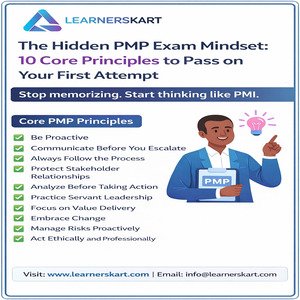
The Hidden PMP Exam Mindset: 10 Core Principles to Pass on Your First Attempt
-
March 18, 2026
Most PMP aspirants believe success comes from memorizing the PMBOK® Guide and solving hundreds of questions.
But here’s the truth:
The PMP exam is not about how much you know — it’s about how you think.
The exam, designed by the Project Management Institute, focuses on your ability to make the right decisions in real-world project scenarios.
That’s why many candidates struggle — even when they’ve studied everything.
🎯 The Real Challenge of the PMP Exam
PMP questions are:
-
Scenario-based
-
Situational
-
Often ambiguous
In most cases:
You’ll find two or more answers that seem correct — but only one aligns with the PMI mindset.
This is where the real challenge lies.
🧠 The Mindset Shift That Changes Everything
To succeed in PMP, you must shift your thinking:
❌ “Which answer is technically correct?”
➡️
✅ “Which answer reflects PMI’s approach?”
Once you understand this, your entire preparation strategy changes — and your scores improve significantly.
🔑 The 10 Core PMP Mindset Principles
These principles act like a hidden rulebook behind most correct PMP answers.
✅ 1. Be Proactive, Not Reactive
PMI expects project managers to:
-
Anticipate risks
-
Prevent issues
-
Take early action
👉 Avoid reactive solutions unless absolutely necessary.
✅ 2. Communicate Before You Escalate
Before escalating any issue:
-
Talk to stakeholders
-
Clarify misunderstandings
-
Try resolving internally
👉 Escalation is usually the last step, not the first.
✅ 3. Always Follow the Process
Even when shortcuts seem easier:
-
Follow change control
-
Stick to defined procedures
-
Respect governance
👉 PMP rewards structured thinking over quick fixes.
✅ 4. Protect Stakeholder Relationships
PMI prioritizes:
-
Collaboration
-
Trust
-
Stakeholder satisfaction
👉 The best answer often protects relationships over results.
✅ 5. Analyze Before Taking Action
Never jump to conclusions:
-
Understand the root cause
-
Review the situation
-
Evaluate options
👉 Think first, act later.
✅ 6. Practice Servant Leadership
Especially in Agile environments:
-
Support your team
-
Remove blockers
-
Empower individuals
👉 A great project manager enables success — not controls everything.
✅ 7. Focus on Value Delivery
Always prioritize:
-
Customer value
-
Business impact
-
Meaningful outcomes
👉 Not all tasks are equal — choose what delivers maximum value.
✅ 8. Embrace Change — Don’t Resist It
Change is inevitable:
-
Accept it
-
Manage it through proper processes
-
Adapt when required
👉 Flexibility with control is key to PMP success.
✅ 9. Manage Risks Proactively
Risk management is central to PMP:
-
Identify risks early
-
Plan responses
-
Monitor continuously
👉 Prevention is always better than correction.
✅ 10. Act Ethically at All Times
According to the Project Management Institute:
-
Be honest
-
Be fair
-
Take responsibility
👉 Ethical decisions are often the correct decisions in PMP.
📊 Example Scenario
Question: A team member makes a mistake that could delay the project. What should you do first?
Option A: Escalate to senior management
Option B: Discuss with the team member to understand the issue
✅ Correct Answer: Option B
👉 Because PMI emphasizes:
-
Communication
-
Root cause analysis
-
Problem-solving before escalation
⚠️ Common Mistakes PMP Aspirants Make
-
Memorizing instead of understanding
-
Ignoring PMI mindset
-
Escalating too quickly
-
Choosing technically correct answers
-
Overlooking stakeholder communication
🏆 Final Thought
Passing the PMP exam is not about studying more —
It’s about thinking differently.
When you start applying these principles:
-
Your confidence increases
-
Your accuracy improves
-
Your chances of passing on the first attempt become much higher
🎓 Ready to Pass PMP Faster?
At Learnerskart, we help professionals:
✔ Master the PMI mindset
✔ Earn 35 PDUs
✔ Practice real exam-level questions
✔ Get PMP certified faster
🌐 Visit: www.learnerskart.com | #x1f4e7; Email: info@learnerskart.com
✔️ Follow us for PM tips amp; career insights: https://lnkd.in/gYB4Dw4K
🔥 Powerful Closing Line
“In the PMP exam, the right answer is not the smartest one — it’s the one that aligns with PMI thinking.”
Tags:
You May Also Like
-
Mar 20, 2026
Introduction In today’s competitive and fast-paced business environment, delivering projects successfully is more challenging than ever. Many projects fail—not due...
-
Mar 17, 2026
In many organisations, the role of a Project Manager is often misunderstood. Some people believe that a great Project Manager...
-
Mar 9, 2026
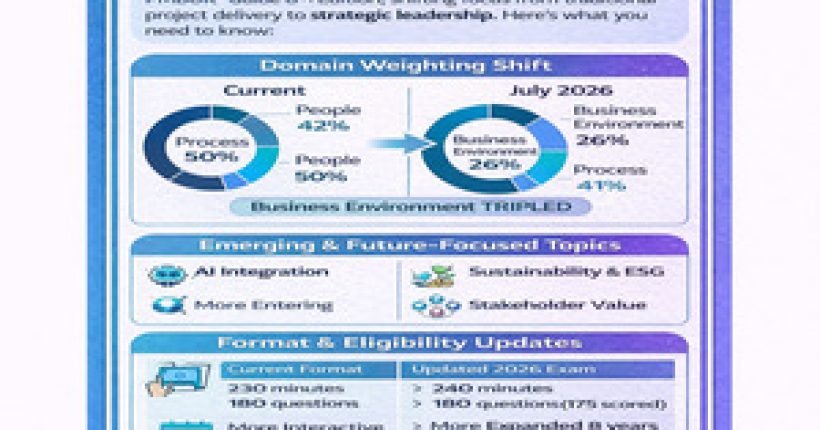
The Project Management Institute (PMI) has announced a major update to the Project Management Professional (PMP®) certification exam, effective March...
-
Mar 6, 2026
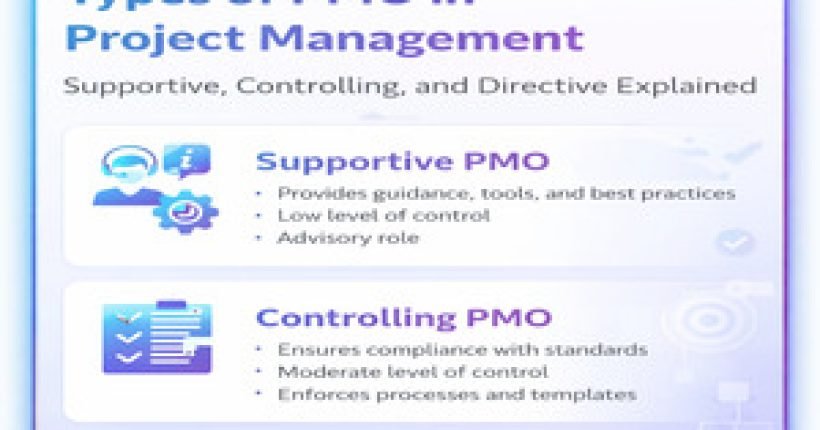
In today’s fast-paced business environment, organizations run multiple projects simultaneously to achieve strategic goals, improve operational efficiency, and stay competitive....
Sign up to receive our latest updates
Company
Support
Service Offerings
Special Offers
Get in touch
India
Call us directly?
+91-984-459-1589
Address
Learnerskart Solutions Pvt Ltd
4th floor, No: 207/189, 9th Main Rd, 6th Sector,
HSR Layout, Bengaluru, Karnataka 560102
info@learnerskart.com
USA
Call us directly?
+1 (307)-998-3816
Address
Learnerskart Americas LLC
30 N Gould St Ste R
Sheridan, WY 82801
info@learnerskart.com
Quick Contact
Trending Categories
Disclaimer
“PMI®”, “PMBOK®”, “PMP®”, “CAPM®” and “PMI-ACP®” are registered marks of the Project Management Institute, Inc.
ITIL® and PRINCE2® are registered trade marks of AXELOS Limited, used under permission of AXELOS Limited. All rights reserved.
“CSM”, “CST” are Registered Trade Marks of The Scrum Alliance, USA.
